

Legally reviewed by Eric Hageman, Managing Partner — Explosion + Burn Legal Team
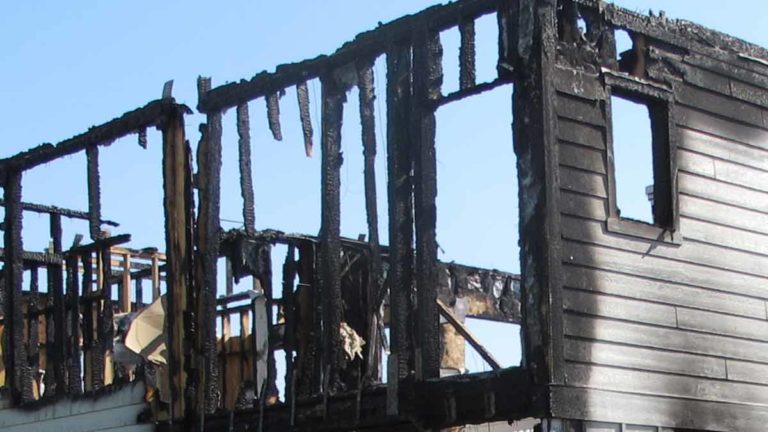
An editorial from the Pritzker Hageman Explosion + Burn Legal Team. For our complete legal guide on suing for a house explosion — including liability, damages, and the lawsuit process — visit our main legal resource at pritzkerlaw.com/explosion-lawyer/can-i-sue-for-a-house-explosion/.
The first 48 hours after a house explosion
The day after the explosion in Greenwood Township, Minnesota, the surviving family member sat in a hospital waiting room and tried to make sense of a phone call from her insurance adjuster. The carrier wanted a recorded statement. They wanted access to the slab where the house had been. They wanted to know whether anyone in the family had touched the furnace in the days before the blast.
She didn’t know that the answers she gave in that phone call could later be used against her in a lawsuit she didn’t yet know she was going to file. She didn’t know that the gas company’s own field crews were already on-scene with cameras and clipboards. And she didn’t know that, in roughly twelve hours, an investigator from the Pipeline and Hazardous Materials Safety Administration would arrive — and that anything she said to him on the public record could later be quoted by the defense in a personal injury case.
House explosions don’t just destroy buildings. They destroy the evidence that survivors need in order to be made whole. In every house explosion case our explosion + burn legal team has ever worked on, the legal stakes were being shaped within hours of the blast — usually before the survivors had any idea a lawsuit was even possible.
This piece is for survivors and families who are in those first 48 hours, or who recently were, and who are starting to ask whether they can sue. The short answer is: in most house-explosion cases, the answer is yes. The longer answer — including who you can sue, how the lawsuit works, and what you can recover — is laid out in Pritzker Hageman’s complete legal guide at Can I sue for a house explosion?. What follows here is the editorial backdrop: the patterns we’ve seen in actual cases, what we wish every survivor knew, and how the legal machine actually starts moving.
Why most house explosions are someone else’s fault
The most important fact about house explosions in America: almost all of them are preventable. They happen because somebody — a utility, a propane supplier, a landlord, a contractor, an installer, a manufacturer — failed at something specific. The investigative job is finding the specific failure and the specific decision-maker behind it.
The patterns we’ve seen most often:
- Gas leaks the utility knew about. The distribution-system gas leak is the classic case. The utility has been on notice — sometimes for months — about a leak in a service line, a corroded main, or a regulator failure. The leak gets logged, gets prioritized, and gets pushed down the work queue. Then it explodes. Pritzker Hageman’s gas explosion lawyers litigate cases exactly like this across the country.
- Propane deliveries that should not have happened. Propane companies have a duty to inspect tanks and check the system before delivery. When they skip the inspection — or when the inspector misses an obvious appliance disconnect — the next delivery fills a leaking system with fuel. Hours later, the house explodes. Propane explosion lawsuits often turn on those skipped or incomplete inspections.
- Improperly capped lines after renovation. A contractor disconnects a gas line — say, to remove an old stove during a kitchen remodel — and leaves the line uncapped or capped wrong. Weeks later, somebody flips a switch. Our legal guide on the propane-filler’s liability explains how this plays out in propane country; the same dynamic applies with natural gas.
- Defective appliances or regulators. Manufactured equipment can fail. Sometimes there’s a recall the homeowner never received. Sometimes the regulator was defective from the day it shipped. Sometimes the appliance had a design defect that the company knew about. These cases bring in product-liability law on top of the basic negligence claim.
- Smell-detection failures. Natural gas is naturally odorless. The “rotten egg” smell is added with a chemical called mercaptan so leaks can be smelled. When the mercaptan fades (it can be absorbed by soil), or when the gas leak path filters the odorant out before it reaches the house, the gas can fill the house silently. Why nobody smelled the gas is often the most important question in the case.
Notice what’s missing from the list: the homeowner did something wrong. In our experience, house explosions caused by the homeowner’s own conduct are unusual. The defense will often try to make that case — they’ll suggest the homeowner installed something incorrectly, ignored a smell, missed a memo. In nearly every case we’ve worked, the actual cause was several steps upstream from anything the survivors had control over.
The “who can I sue?” map
For the full legal framework of who can be named as a defendant in a house-explosion lawsuit, see Pritzker Hageman’s main resource: Can I sue for a house explosion?. That page walks through liability theories, statute of limitations, and damage categories in detail.
The short summary, as a map for thinking about your own case:
- Utility / pipeline operator. If the gas came from a distribution main, the local utility is often a defendant. The gas explosion lawsuit framework typically alleges negligent inspection, negligent maintenance, or knowledge of a hazard the utility failed to fix.
- Propane company. If you were on propane, the supplier is the likely first defendant. They are usually the ones who filled, inspected, installed, or relit the system.
- Contractor or installer. Did anyone work on the gas system recently? Plumber? HVAC tech? Appliance installer? They may be in the chain.
- Landlord (if you rented). Landlords have a duty to maintain habitable premises and not to subject tenants to known hazards. If your landlord knew about a problem and didn’t fix it, that’s a case.
- Manufacturer. The appliance, regulator, valve, or connector that failed may have been defective. Product liability is a separate theory of recovery that can run alongside the negligence claims.
- Government entity, sometimes. In limited cases, a municipal or state entity may be liable. These cases have shorter deadlines and more procedural hurdles. Get a lawyer involved fast.
Damages: what a house-explosion case is worth
House explosion survivors typically have several overlapping categories of damage:
- Medical expenses — past, present, and future. Burn care is the most expensive form of medical care in the United States. ICU stays, skin grafts, infection management, physical therapy, mental-health care, prosthetics, and long-term reconstructive surgery all compound.
- Lost wages and lost future earning capacity. Many survivors cannot return to the work they did before.
- Pain and suffering. The non-economic harm of a severe burn — the disfigurement, the loss of normal function, the trauma — is real and is compensable.
- Wrongful death damages, if a loved one didn’t survive. Who can file a wrongful death lawsuit varies by state, but typically a spouse, children, or parents of the decedent can pursue these claims.
- Property damage and replacement of belongings.
- Punitive damages, in cases where the defendant’s conduct rises to gross negligence or recklessness.
Pritzker Hageman has obtained recoveries in the millions for house-explosion survivors. Our results include a $10 million recovery for a client who was burned when a residential propane leak caused a house to explode. Read one client’s story in his own words.
What to do in the first 48 hours
For survivors and families still in those first hours and days:
- Don’t sign anything. Insurance adjusters and utility reps will ask for releases, recorded statements, and access to the property. Their job is to limit their employer’s liability, not to look out for you. You don’t have to sign anything in the first 48 hours.
- Don’t give a recorded statement. Anything you say can be played back in deposition or trial. If pressed, say: “I’ll be happy to talk once I’ve spoken with an attorney.”
- Take pictures of everything you can. The scene, the medical care, the personal effects. Make a contemporaneous record. Time-stamped phone photos work fine.
- Preserve everything. Don’t throw out scorched debris, twisted regulators, melted hoses, or anything else that might be evidence. If the property is being demolished, ask the cleanup company to hold any fixtures associated with the gas system.
- Save every piece of paper. Utility bills, propane delivery receipts, work orders, inspection reports, recall notices. Even if a piece of paper doesn’t seem relevant, save it.
- Get the medical care you need. Don’t underplay your symptoms. Burns, smoke inhalation, hearing damage, PTSD — all of it should be documented now.
- Talk to an experienced explosion lawyer early. The investigation is on a clock. Evidence disappears.
How our team works a house-explosion case
If your case becomes one we handle, here’s what happens behind the scenes:
Within hours. Eric Hageman or another attorney from our explosion + burn legal team will be on a call with you. If the scene is fresh, we’ll engage an independent fire investigator and a metallurgy expert immediately. We’ll send preservation letters to the utility, propane supplier, landlord, and any contractor who recently worked on the property — putting them on notice that destroying or modifying evidence will be sanctioned.
Within days. If you’re hospitalized, we’ll come to you. We don’t expect survivors to travel to law offices. We’ll begin gathering the documentary trail: utility records, propane delivery logs, prior work orders, complaint history, recall notices on any appliance involved.
Within weeks. We’ll have a working theory of cause and origin. We’ll have identified the most likely defendants. We’ll have started building the damages model with a life-care planner if injuries are severe.
Within months. We’ll file suit. The defendants will respond. Discovery begins. In some cases, defendants offer a settlement before discovery completes; in others, the case proceeds toward trial.
You never pay anything unless we win for you, and there is no cost to you for asking.
“They flew out right away to see us and they listened.”
“As soon as the injuries happened, people were pressuring us to hire this lawyer or that lawyer and we received visits from some of them. They didn’t reassure us at all. They just pressured us and told us we needed to sign up with them. … The Pritzker Hageman law firm was different. We did our research and we actually called them based on their experience. They flew out right away to see us and they listened. They asked us what kind of lawyer we were looking for. It was a really good vibe right from the beginning and now our attorneys are like family to us.”
Survivor and Family
Frequently asked questions
Common questions about suing for a house explosion
Statutes of limitations vary by state — typically two to four years for personal injury, sometimes shorter for wrongful death claims against government entities. Don’t wait. The investigation is on a clock, and evidence disappears. The earlier you call, the better.
You don’t need to know. Identifying the responsible parties is the lawyer’s job. We engage independent fire investigators and engineers to determine cause and origin. In our experience, the actual cause is often several steps upstream from what survivors initially suspect.
Nothing. The consultation is free and confidential, and you never pay anything unless we win for you.
Yes. Tenants of a destroyed rental property have the same rights to sue the utility, propane company, contractor, or manufacturer. You may also have a separate claim against the landlord depending on what they knew about the property’s gas system.
Wrongful death claims belong to the survivors. Spouse, children, or parents (depending on state law) can typically pursue these claims. Our team handles wrongful death litigation nationwide. See Pritzker Hageman’s resource on who can file a wrongful death lawsuit.
Usually but not always. Some defendants (like national propane suppliers or appliance manufacturers) can be sued in multiple jurisdictions. Where to file is a strategic decision your lawyer makes based on the facts and the law.
Most cases settle before trial. But some don’t — and when they don’t, we’re prepared to try them. Eric Hageman is a trial lawyer first.
For the complete legal guide
This piece is the editorial backdrop — the case-history view of what suing for a house explosion looks like in practice. For Pritzker Hageman’s complete legal guide on the topic — including the formal legal framework, the lawsuit process, the damages categories, the timeline, and the statutes of limitations by state — visit our main resource at pritzkerlaw.com/explosion-lawyer/can-i-sue-for-a-house-explosion/.
If you’d like to talk to Eric Hageman or another member of our explosion + burn legal team about your specific situation, the consultation is free. Call 1-888-377-8900 or fill out our contact form.

